


The Best Way to Organise Kitchen Cabinets


Kitchen Organisation Tips for Homes in Sevenoaks & Kent
A well organised kitchen does more than simply look tidy. It saves time, reduces stress, cuts down on food waste, and makes cooking far more enjoyable. Whether you have a compact galley kitchen or a spacious family hub, the key to effective organisation is creating a system that works with your daily habits rather than against them.
Many homeowners struggle with overcrowded cupboards, awkward corner cabinets, piles of mismatched containers, and forgotten ingredients hidden at the back of shelves. Fortunately, with a few smart strategies and the right storage tools, you can transform even the messiest cabinets into efficient, functional spaces.
Alix x
Start With a Full Declutter
Before buying storage baskets or drawer dividers, begin by emptying your cabinets completely. Decluttering is the foundation of every organised kitchen.

Sort everything into categories:
Everyday dishes
Pots and pans
Baking supplies
Food storage containers
Spices and dry goods
Cleaning products
Small appliances
As you sort, ask yourself:
Do I use this regularly?
Is it broken or damaged?
Do I own duplicates?
Has it expired?
One of the most common things I see when helping clients organise their kitchens is cupboards filled with items they forgot they even owned. Decluttering first often creates far more space than people expect and makes it much easier to create systems that actually last.
If you have unwanted but usable kitchen items, consider donating them to local charities such as Hospices Of Hope or Demelza in Sevenoaks.
Organise Cabinets by Zones

One of the best ways to organise kitchen cabinets is to create zones based on how you actually use your kitchen.
Think about your kitchen in terms of activity areas.
Cooking Zone
Store pots, pans, utensils, oils, spices, and chopping boards near the hob.
Preparation Zone
Keep knives, mixing bowls, measuring tools, and food preparation items close to your worktop space.
Cleaning Zone
Place cleaning sprays, dishwasher tablets, cloths, and bin bags beneath the sink.
Breakfast and Beverage Zone
Keep mugs, tea, coffee, cereal, and toaster items together to make busy mornings easier.
Food Storage Zone
Dedicate a cabinet to dry foods, snacks, lunch items, and pantry essentials.
I always recommend arranging kitchens according to frequency of use. Everyday items should sit at eye level or within easy reach, while seasonal or rarely used equipment can be stored on higher shelves.
Use Vertical Space Properly

One of the biggest kitchen storage mistakes homeowners make is wasting vertical cabinet space.
Tall cupboards often become stacked chaos, with large gaps above shorter items and products hidden behind one another.
To maximise vertical storage:
Use shelf risers
Add stackable organisers
Install under-shelf baskets
Use plate racks
Add hooks inside cupboard doors
Making better use of vertical space can dramatically increase your available storage without adding extra cabinets.
Lazy Susans are particularly effective in corner cupboards where items often disappear into the back. Pull-out shelving and rotating trays make everything visible and much easier to access.
For kitchen storage accessories and cabinet fittings, Toolstation Sevenoaks offers affordable organisers, shelf brackets, hooks, and pull-out storage solutions.
Invest in Drawer Dividers

Kitchen drawers can quickly become clutter magnets without some form of structure.
A single drawer can easily become a mixture of utensils, batteries, takeaway menus, spare candles, and mystery gadgets that nobody remembers buying.
Drawer dividers instantly improve functionality by giving every item a designated home.
Use dividers for:
Cutlery
Cooking utensils
Baking tools
Food wraps and foil
Spice packets
Tea bags and coffee pods
Adjustable organisers work particularly well because they can evolve as your kitchen needs change.
Divided drawers improve visibility, reduce frustration, and make it much easier to keep your kitchen organised long term.
Store Items Where You Actually Use Them
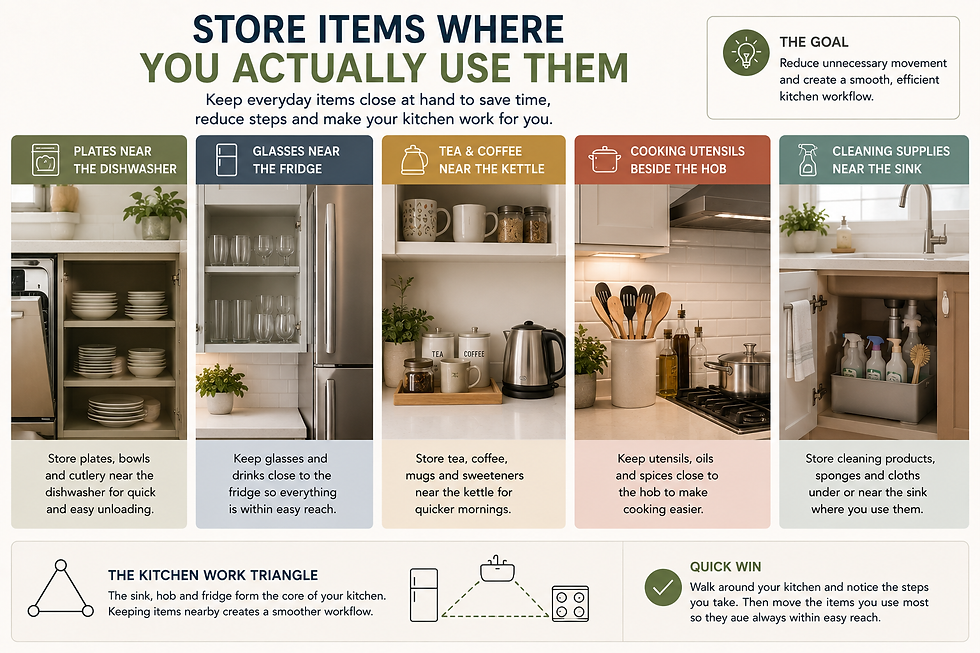
This sounds obvious, but many kitchens are organised based on appearance rather than practicality.
A beautifully organised kitchen is of little use if you constantly walk across the room searching for everyday essentials.
Keep:
Plates near the dishwasher
Glasses near the fridge
Tea and coffee near the kettle
Cooking utensils beside the hob
Cleaning supplies near the sink
The goal is to reduce unnecessary movement and create a smoother workflow throughout the kitchen.
Kitchen designers often refer to this concept as the “kitchen work triangle”, which focuses on the relationship between the sink, cooker, and fridge.
Use Clear Containers for Food Storage
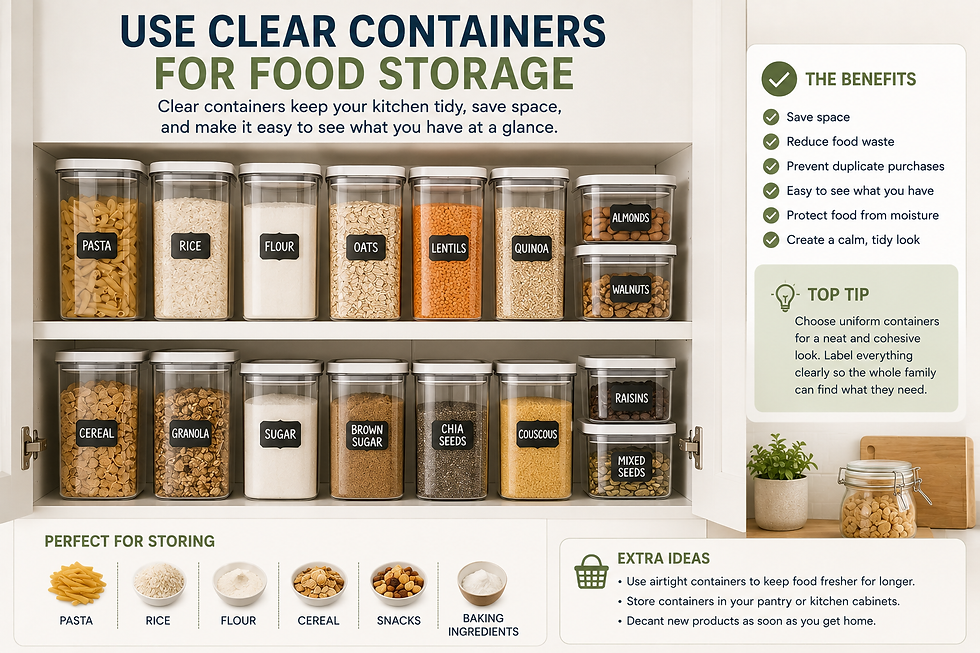
Decanting dry goods into clear containers is one of the simplest ways to improve kitchen cupboard organisation.
Clear containers:
Save space
Reduce food waste
Prevent duplicate purchases
Make ingredients easier to find
Protect food from moisture
They work particularly well for storing:
Pasta
Rice
Flour
Cereal
Snacks
Baking ingredients
Label everything clearly to avoid confusion.
I always recommend using uniform containers where possible. They create visual calm and allow you to instantly see stock levels without rummaging through packets.
For affordable jars, baskets, and kitchen organisers, Robert Dyas Sevenoaks offers a wide selection of practical storage solutions.
Tackle the Infamous Tupperware Cabinet

Almost every kitchen has one.
The cupboard packed with mismatched containers, missing lids, and plastic tubs that seem to multiply overnight.
To organise food storage containers effectively:
Match all lids before storing
Recycle damaged containers
Nest containers by size
Store lids vertically
Use baskets or magazine files for separation
I often tell clients that if the cabinet explodes every time you open it, you probably own too many containers.
Reducing the quantity can instantly make this space more manageable.
Don’t Ignore Under Sink Storage

The cabinet beneath the sink is often one of the most challenging spaces to organise because of plumbing, pipes, and awkward layouts.
However, with the right approach, it can become one of the most functional storage areas in the kitchen.
Consider using:
Stackable clear drawers
Pull-out caddies
Door-mounted racks
Small storage baskets
Tension rods for hanging spray bottles
Motion-sensor LED lights can also make a huge difference by improving visibility inside dark cupboards.
A well-organised under-sink cabinet makes cleaning supplies easier to access and prevents products from becoming forgotten or wasted.
Make Deep Cabinets More Accessible

Deep kitchen cabinets often become black holes where items disappear for months at a time.
Instead of endlessly stacking products on top of one another, consider:
Pull-out baskets
Sliding shelves
Turntables
Full-extension drawers
These solutions allow you to see everything at a glance rather than having to crouch down and dig through layers of items.
If you are considering a full kitchen redesign or bespoke storage upgrade, local companies such as Howdens Sevenoaks, SCHMIDT Sevenoaks, Kitchens & Home Living Furniture, Kraus Kitchens Sevenoaks, and Kutchenhaus Sevenoaks offer custom cabinet systems designed to maximise storage and improve accessibility.
Create an Easy Maintenance System

The secret to maintaining organised kitchen cabinets is simplicity.
Complicated systems rarely last because they require too much effort to maintain.
To keep your kitchen organised long term:
Label shelves and containers
Return items immediately after use
Carry out a mini declutter every few months
Avoid overbuying food
Keep countertops as clear as possible
Organisation is not about perfection. It is about creating systems that are easy to maintain every day.
The simpler the system, the more likely it is to stick.
Frequently Asked Questions
How do I organise kitchen cabinets efficiently?
The most effective way to organise kitchen cabinets is to declutter first, create zones based on how you use your kitchen, and keep frequently used items within easy reach.
What should be stored in upper kitchen cabinets?
Upper cabinets are ideal for dishes, glasses, mugs, baking supplies, and foods used regularly. Less frequently used items can be stored on higher shelves.
How often should I declutter kitchen cupboards?
A quick review every three to six months helps remove expired food, reorganise supplies, and prevent clutter from building up.
What are the best kitchen storage solutions for small kitchens?
Shelf risers, drawer dividers, pull-out organisers, clear containers, and vertical storage solutions can dramatically increase usable storage space in smaller kitchens.
Final Thoughts

An organised kitchen cabinet system should make your life easier, not harder. The best kitchens are not necessarily the largest or most expensive. They are the ones designed around everyday habits and practical routines.
By decluttering regularly, creating functional zones, using vertical space wisely, and investing in simple storage tools, you can completely transform your kitchen experience.
Whether you are organising a kitchen in Sevenoaks, Tonbridge, Tunbridge Wells, Westerham, Otford, or elsewhere across Kent, the key is creating systems that fit your lifestyle. A well-organised kitchen should make cooking, cleaning, and everyday life easier.
Start small. Even organising one cabinet at a time can create a noticeable improvement. Once everything has a proper place, cooking becomes smoother, cleaning becomes faster, and your kitchen feels calmer and more enjoyable to spend time in.
Most importantly, remember that organisation is personal. The perfect kitchen setup is the one that works best for your lifestyle, cooking habits, and family routines.
Alix and Georgina
📞 Call: 07973 957599
📧 Email: declutteringcrew@gmail.com
Tag line

Comments